
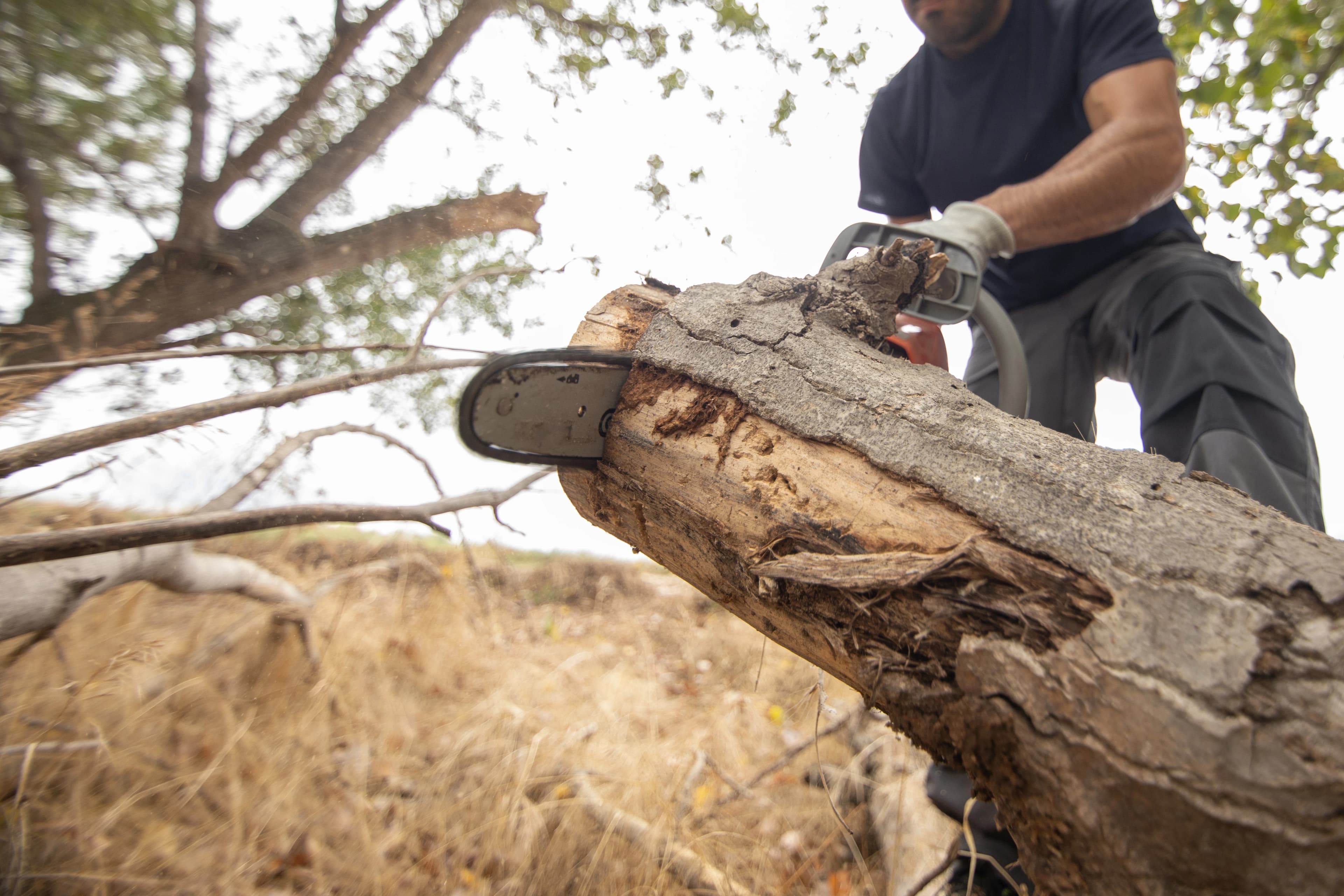
Tree Removal, Topping and Shaping
Tree Removal, Topping and Shaping Services in Dublin
Trees are brilliant until they aren’t. A tree that’s grown too big for the garden can block light, crack paving, drop branches on the car or press against the house. Dealing with one yourself is risky, which is why this is a job for people with the training and equipment to do it safely.
We remove, reduce and shape trees for homes across Dublin. Whether you need a dangerous tree taken down, a tall one cut back or a tired tree tidied up, we’ll tell you honestly what the tree needs and do it safely, then clear up after.
Tree Services We Offer
- Tree removal and felling: trees taken down safely, whole or in sections, depending on the space around them.
- Sectional dismantling: for trees close to houses, fences, wires or neighbouring gardens, where we take the tree down piece by piece and lower each section under control.
- Tree topping and crown reduction: reducing the height and spread of a tree that’s grown too large (see below).
- Tree shaping and pruning: removing crossing, crowded or awkward branches so the tree looks balanced and healthy.
- Crown thinning and lifting: letting in more light and clearing space under the canopy, over paths, driveways and lawns.
- Dead and dangerous wood: dead, diseased or damaged branches removed before they come down on their own.
- Storm-damaged trees: broken limbs and leaning or fallen trees made safe.
After the tree is down, you may want the stump removed too. See our stump grinding service.
A Word on Tree Topping
“Topping” is the word most people use when they want a tall tree made shorter. But cutting the top of a tree flat can seriously harm many species. It leaves large wounds that are slow to heal, and it can trigger weak, fast regrowth that’s more likely to break in a storm.
For most trees we recommend a proper crown reduction instead. This means selective cuts that bring the height and spread down while keeping the natural shape. It does the same job, looks better and is much better for the tree. If a tree is too far gone or in the wrong place, we’ll tell you honestly that removal is the better option.
Signs a Tree Needs Attention
- Dead branches, or branches with no leaves in summer
- Cracks, splits or hollows in the trunk
- The tree is leaning, or has started leaning more than before
- Fungus growing on the trunk or around the base
- Roots lifting paving, or branches touching the roof, gutters or windows
- The tree has grown so large that it blocks light or has become hard to manage
- Storm damage, such as torn limbs or a split trunk
Not sure if your tree is a problem? Send us a photo and we’ll give you an honest opinion.
Before Any Tree Work Starts
There are a few rules in Ireland worth knowing about. We’ll flag any that apply to your tree, but it helps to know in advance:
- Protected trees: some trees are protected by a Tree Preservation Order (TPO). Dublin’s local councils maintain these, and you need consent before significant pruning, topping or removal. If you’re not sure whether yours is protected, check with your local council, or ask us.
- Nesting season and wildlife: it’s illegal to cut or destroy vegetation in hedges and uncultivated land between 1 March and 31 August, and nests and bats are protected all year round. We check trees for nests and roosts before work, and schedule non-urgent jobs around the season.
- Overhead power lines: if a tree is touching or close to overhead electricity lines, don’t go near it. Contact ESB Networks.
- Boundaries and neighbours: if a tree sits on a boundary, or you rent your home, make sure the owner or neighbour agrees before work starts.
Safe Tree Work
Tree work is among the riskiest jobs in gardening, and it’s important to know who you’re letting into your garden. We use the right equipment for each job and set up an exclusion zone around the work area, so your family, your neighbours and your property stay protected.
How It Works
- Send us photos: a few pictures of the tree from different angles, plus a rough idea of what you’d like done.
- Assessment and quote: we assess the tree, the access and any rules that apply, then give you a clear written price.
- Safe set-up: we protect the area around the tree and plan how each part will come down.
- Tree work: the tree is removed, reduced or shaped, section by section where needed.
- Clear-up: branches are chipped and cleared, and the garden is left tidy.
What Happens to the Wood and Branches?
We clear all the branches and waste, so you aren’t left with a pile in the garden. If you’d like to keep the logs for firewood, just say so and we’ll leave them for you. We can also leave wood chip for use as mulch in your beds.
How Much Does Tree Work Cost in Dublin?
Tree work is priced per job, because no two trees are the same. The main factors are:
- The size and height of the tree
- How close it is to buildings, wires, fences and neighbouring gardens
- How easy or hard it is to get in and out of the garden
- Whether the tree can be felled whole or needs to be taken down in sections
- The amount of waste to clear, and whether you want the stump ground out too
The quickest way to get an accurate price is to send us photos for a free quote. We’ll tell you honestly what we recommend, and why.
Why Choose Us
- Honest advice: we’ll tell you if a tree can be saved with careful pruning, rather than recommending removal for the sake of it.
- Safety first: trained climbers, proper equipment and careful planning on every job.
- Clear written quotes: you know the price before we start.
- A tidy finish: branches cleared and the garden left clean.
- One team for the whole garden: tree work, garden clearance, hedging and landscaping.
Tree Work Across Dublin
We carry out tree work throughout Dublin city and county, including North Dublin, South Dublin, Fingal and Dún Laoghaire-Rathdown. From a small suburban garden to a large plot with mature trees, we’re happy to help.
Not sure we cover your area? Send us a message and we’ll let you know.
Frequently Asked Questions
Do I need permission to remove a tree in my garden?
Often not, but there are exceptions. Trees covered by a Tree Preservation Order need consent from your local council first. If you rent, or the tree is on a boundary, you’ll need the owner’s or neighbour’s agreement too. If you’re not sure, ask us or your council before any work starts.
Can you remove or cut a tree in summer?
Between 1 March and 31 August, the law restricts cutting vegetation in hedges and uncultivated land, and nests and bats are protected all year. We check for nests and roosts before every job, and we schedule non-urgent work for outside the season where possible. Urgent safety work is assessed case by case.
Is topping bad for my tree?
Cutting the top off flat can harm many trees and leave them weaker. For most trees, we recommend crown reduction, which brings the size down with selective cuts and keeps the tree’s natural shape.
Can you take down a tree that’s close to my house?
Yes. For trees close to buildings, fences or wires, we take them down in sections, lowering each piece under control so nothing lands where it shouldn’t.
Will you remove the stump as well?
Yes, if you’d like. We can grind the stump below ground level so you can lay turf, plant or build over it. See our stump grinding service.
What happens to the branches and logs?
We clear them away as part of the job, or leave you the logs and wood chip if you’d like to keep them.
How long does it take?
Many domestic jobs are completed in a day, but large trees, tricky access and big clear-ups can take longer. We’ll give you an estimate with your quote.
Do I need to be at home?
Not necessarily, as long as we can reach the tree and have agreed the work. We’ll confirm timings in advance.
Need a Tree Dealt With?
If you have a tree that’s too big, too close, damaged or just in the wrong place, send us a photo. We’ll tell you what we’d do, and what it will cost. Get in touch for a free, no-obligation quote.
Get your free quote or call us on +353 851433743.
Planning more garden work? We also offer instant turf laying, fencing and jet and power washing across Dublin.